There has been some serious weeding happening at Sutton Reserve, with a major pine tree removal project helping restore the open woodland character of this special patch of remnant Box Gum Grassy Woodland in the heart of the village.
For years, parts of the reserve had become overrun with self-sown Pinus radiata pine trees. Dense stands of pines were smothering large sections of the reserve, blocking sunlight from reaching the ground layer and placing increasing pressure on native grasses, shrubs and eucalypts struggling beneath them.
Sutton Landcare volunteers have long been caring for the reserve alongside council, tackling invasive weeds such as blackberries and hand-removing species like serrated tussock and St John’s wort, while also working hard to prevent African love grass from spreading further into the reserve. Volunteers have also been helping control vertebrate pests, including rabbits.
But some of the woody weeds had simply grown beyond what volunteers could manage alone.
Around 60 pine trees of varying sizes were professionally removed over several days, helping return the reserve to a more open grassy woodland structure. Some of the largest trees removed were over 80 centimetres in diameter, while smaller trees around 15 centimetres across were also taken out. The team carefully brought down and mulched the pines, with several larger logs intentionally left behind to provide habitat structure and ground shelter for wildlife.
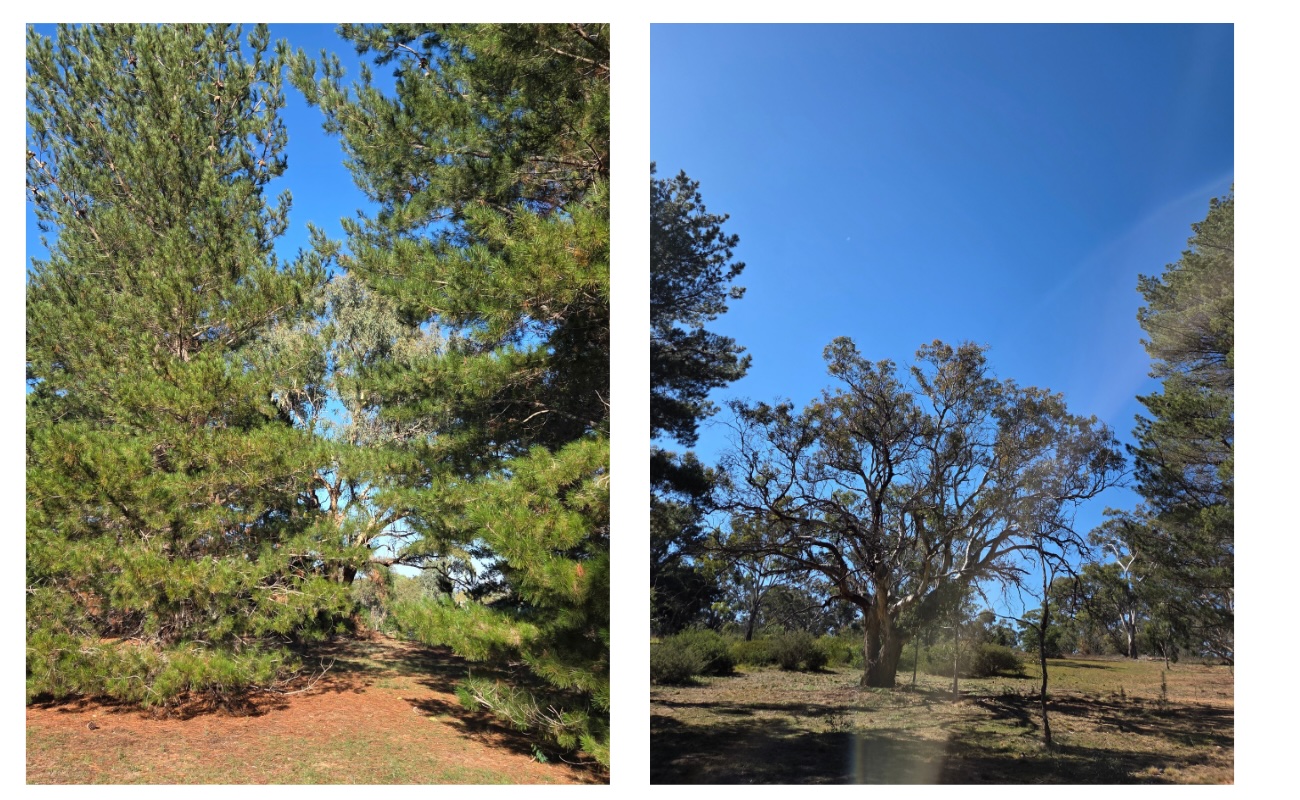
One of the biggest surprises was discovering just how many young eucalypts had been hidden beneath the pines. Many smaller native trees, in some cases around 15 meters tall, had become almost invisible under the dense canopy. Now freed from competition for light and space, these struggling eucalypts have a much greater chance to survive, regenerate and once again become part of the woodland canopy.
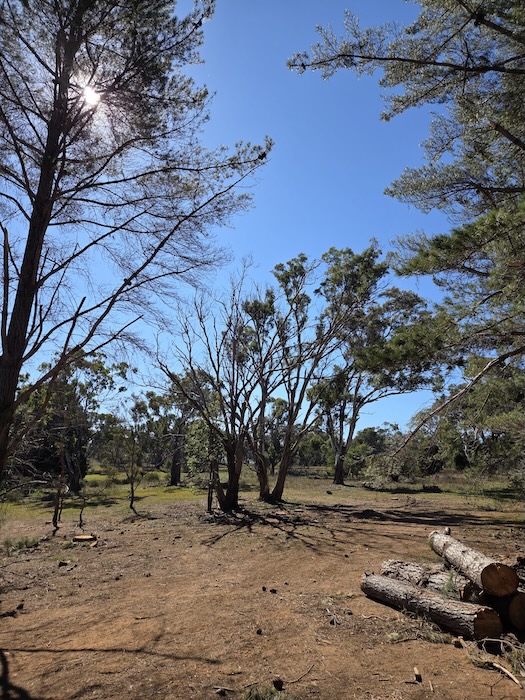
The change in the landscape has been dramatic. Areas that once felt dark and overcrowded are now opening back up into the grassy woodland structure that is typical of this endangered ecological community. The removal of the pines has also helped reduce fire risk near Sutton Village.
The work is already creating opportunities for community connection and restoration.
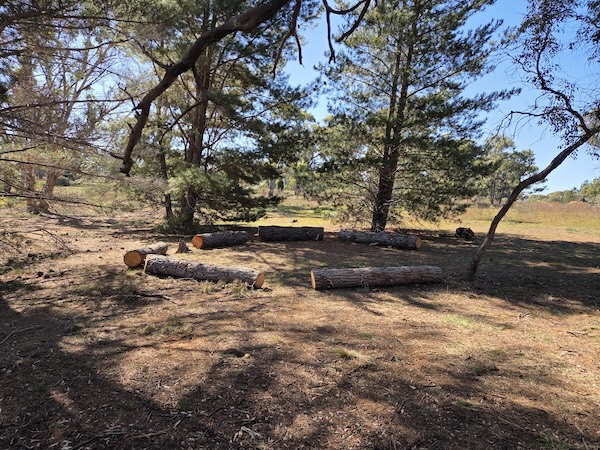
A new yarning circle was created using some of the timber and was immediately put to use during a Canberra Girls Grammar School Founders Day working bee held on Friday 8 May. Students enthusiastically planted more than 70 native plants supplied by the Yass Landcare Nursery, embracing the hands-on nature of the day and keen to return again in future.
The timing worked perfectly, with the pine removal completed just before the planting day. Large piles of pine mulch are now being reused across the reserve to cover bare soil, protect new plantings and help restore a litter layer around the newly freed eucalypts.
Importantly, this is only the first stage of ongoing restoration work. Sutton Landcare volunteers will continue weeding, replanting and caring for this important reserve into the future, gradually helping native grasses, wildflowers and woodland species reclaim the site. Smaller pine trees have been left for volunteers to continue removing over time as part of ongoing maintenance.
Sutton Reserve is a reminder that ecological restoration is often about patience, persistence and community effort and that sometimes you really can’t see the forest for the trees.
To get involved with future working bees or learn more about Box Gum Grassy Woodland conservation in the area, get in touch with Sutton Landcare or the Yass Area Network of Landcare Groups.
Written by Sarah McGrath, YAN Landcare Coordinator