
On a cool autumn morning, community members gathered at Bywong for the recent Below Your Knees weeds and grasslands gathering, an event that brought people together to learn more about the remarkable diversity and management of local grassland environments.
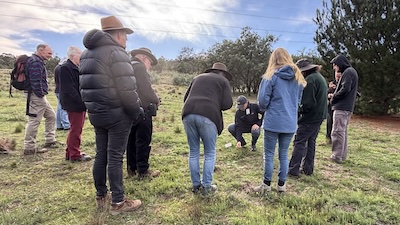
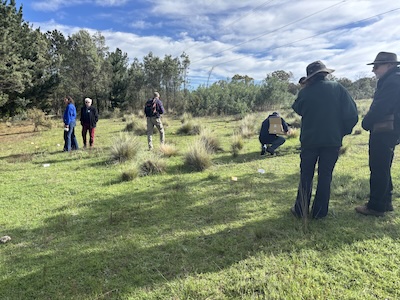
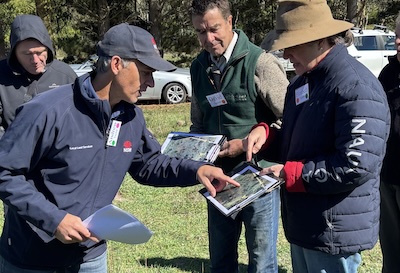
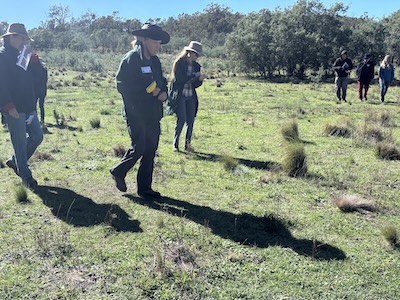
Despite the relatively small area visited, participants were struck by the abundance of both native and exotic species present, including several rare native grassland plants. Members of Friends of Grasslands had carefully identified and flagged a wide range of species, allowing attendees to closely examine plants and compare some of the common look-alikes that can challenge even experienced land managers.
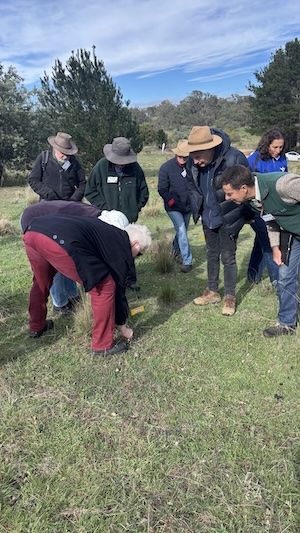
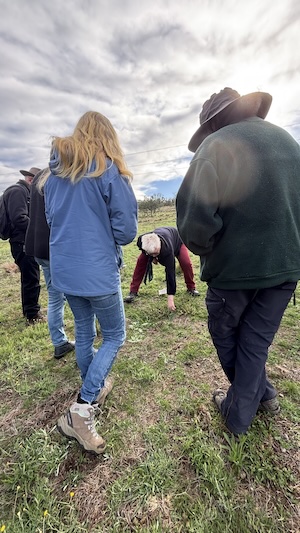
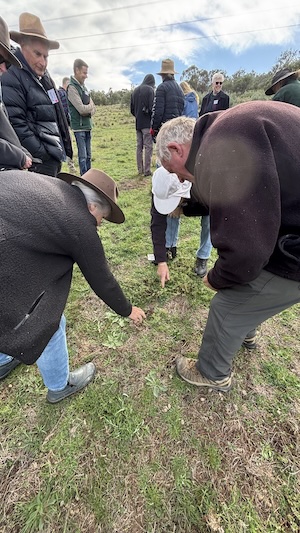
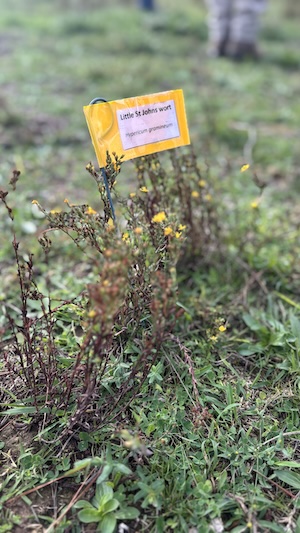
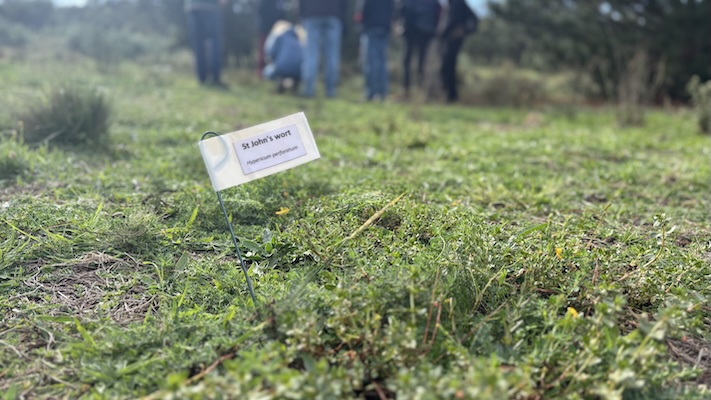
The field observations highlighted how easily species can be confused in the paddock, with practical comparisons such as native wort alongside the introduced weed St John’s wort, and native Poa labillardierei compared with serrated tussock (native -yellow flags, exotic - white flags). Seeing these differences firsthand reinforced how important accurate identification is in making sound management decisions.
Local grasslands ecologist, Sue McIntyre spoke about the resilience and long-term value of native grasslands, particularly in the face of increasingly variable climatic conditions. She explained that perennial native grasslands, with their diversity of species, ensure there is always something ready to respond to changing seasonal conditions. While native grasslands may not provide the same bulk production as European-style pastures, they often offer greater consistency over time.
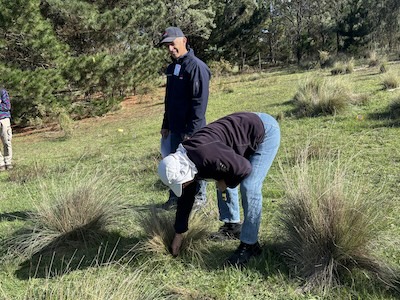
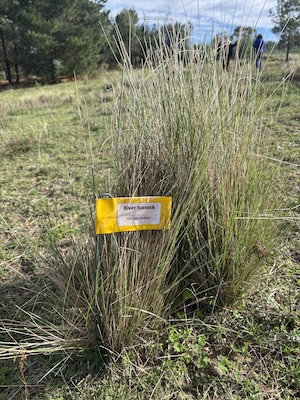
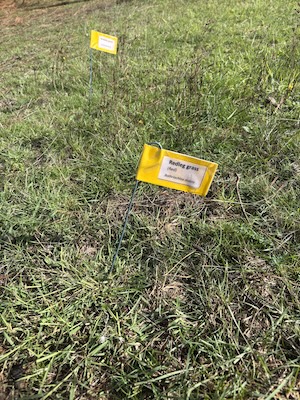
Sue also discussed how many native grasslands occur on better soils where where frost, topography and underlying geological conditions has historically limited tree growth, and how dominant species such as kangaroo grass, poa and wire grass require thoughtful management. Techniques such as heavy intermittent grazing, or fire can help maintain diversity, while larger tussock species provide vital ground protection and create conditions that support many other plants.
Andy Taylor from Local Land Services then guided the group through practical weed management principles, emphasising integrated weed management approaches. His key messages included correctly identifying plants, understanding weed lifecycles, mapping weed presence, and preventing seed set wherever possible.
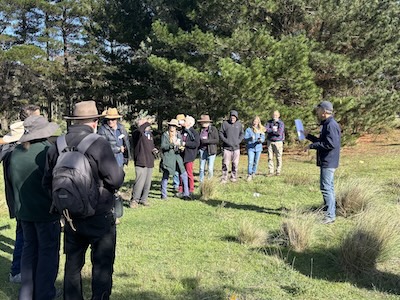
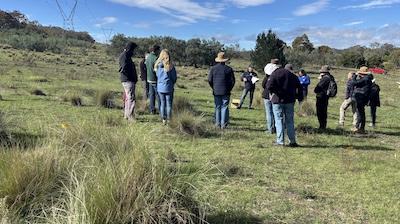
Participants also took part in a short mapping exercise designed to help landholders think about their own properties. The exercise demonstrated a simple way to identify weed outbreaks, bare patches, and other areas likely to need attention in coming seasons, giving attendees a practical tool they could readily apply at home.
A consistent theme across the day was that weed and grassland management is never a quick fix. Speakers stressed that it is an ongoing process, one that becomes part of a long-term land stewardship ‘lifestyle’. Importantly, when neighbours and communities work together, the burden becomes lighter and the results stronger.
The afternoon session, led by Dr Sonia Graham from the University of Wollongong, shifted focus to the power of community-led action. Drawing on examples from other regions, Dr Graham shared inspiring stories of communities defining their own local goals; whether preventing serrated tussock from seeding in a district, restoring sections of riverbank, or protecting high-quality remnant vegetation.
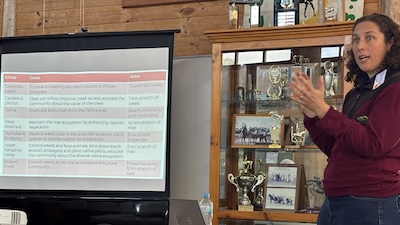
Her discussion acknowledged that weed management can sometimes be contentious, particularly where differing views exist around herbicide use or the role of species such as willows. Rather than beginning with conflict, she encouraged a “bright spots” approach: identifying and protecting areas that are already functioning well and building from those strengths. Working from common goals and brining landholders, local government and other organisations together in a integrated approach has really made a big impact.
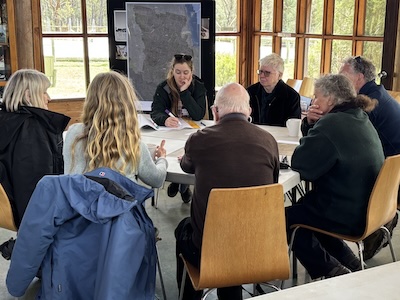
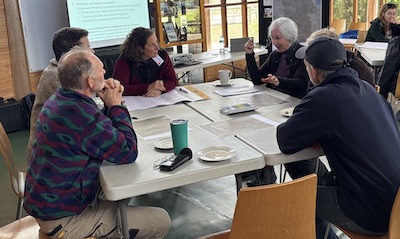
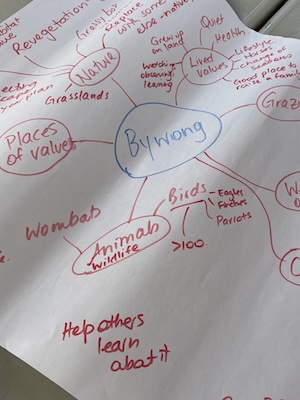
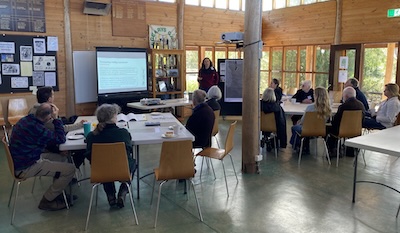
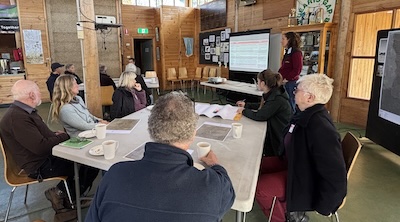
Participants then gathered in geographic groups to discuss meaningful goals for their own local areas. The conversations created space for neighbours to share what is already working, what challenges remain, and where further support may be needed. By the end of the day there was a clear commitment to keep meeting, continue the conversation, and strengthen local collaboration around grassland and weed management.
The gathering highlighted that caring for what is below our knees is not only about plants and weeds, it is also about building the community connections that make long-term landscape care possible
Written by Sarah McGrath, YAN Coordinator
