
Have you ever wondered about the 'parents' of your Landcare nursery plants?
While many YAN Landcare members are placing their orders for autumn tubestock, we’re looking ahead to spring by sourcing the seed we need to produce next year’s genetically diverse climate-ready plants.
Careful seed sourcing is a core component of YAN’s Climate Ready Revegetation Program. To maximise genetic diversity, we purposely source seed from across a species’ natural distribution, informed by genetic mapping where it is available (keep reading for more on that).
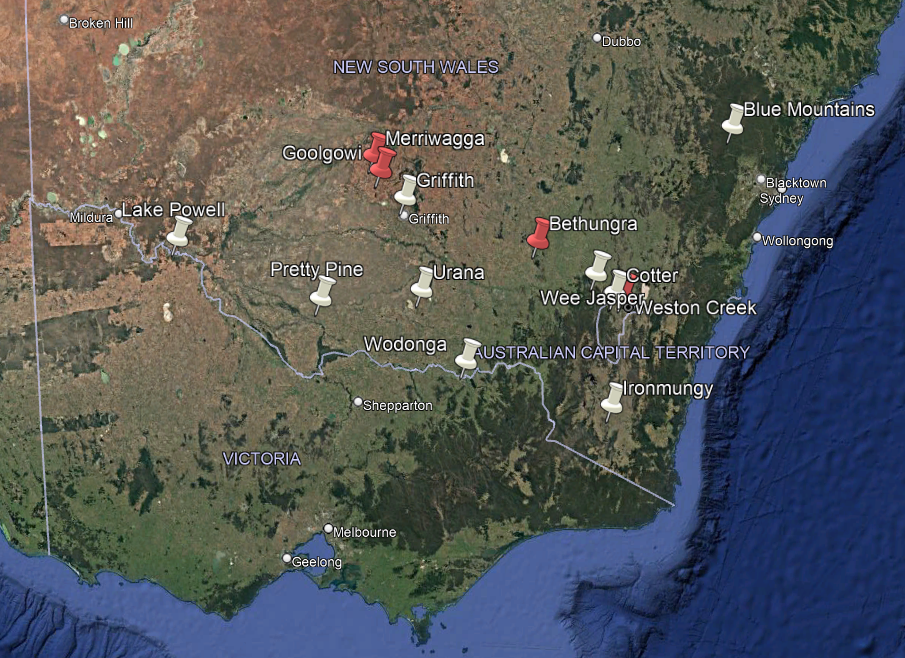
We use Google Earth as a decision-making tool in the process of seed sourcing
This approach helps to mimic the natural gene flow that existed before widespread habitat fragmentation. Genetic diversity translates into a variation of plant traits, some of which will be better suited to surviving our changing climate and other environmental pressures. Those that are advantageous will survive and be passed on to the next generation. This is the essence of ‘adaptive capacity’. It means that a plant population can be self-sustaining over the long term.
Luckily, with the Restore & Renew (R&R) webtool, we now have information at hand to make sure we are maximising genetic diversity as well as minimising the risk of 'outbreeding depression'—where bringing together genetics that are too different can actually reduce a plant’s fitness. There are currently 100 species on the R&R webtool. While we only grow about 40 species in our nursersies, around a quarter of those—including most of our Eucalypts—are covered by the tool.
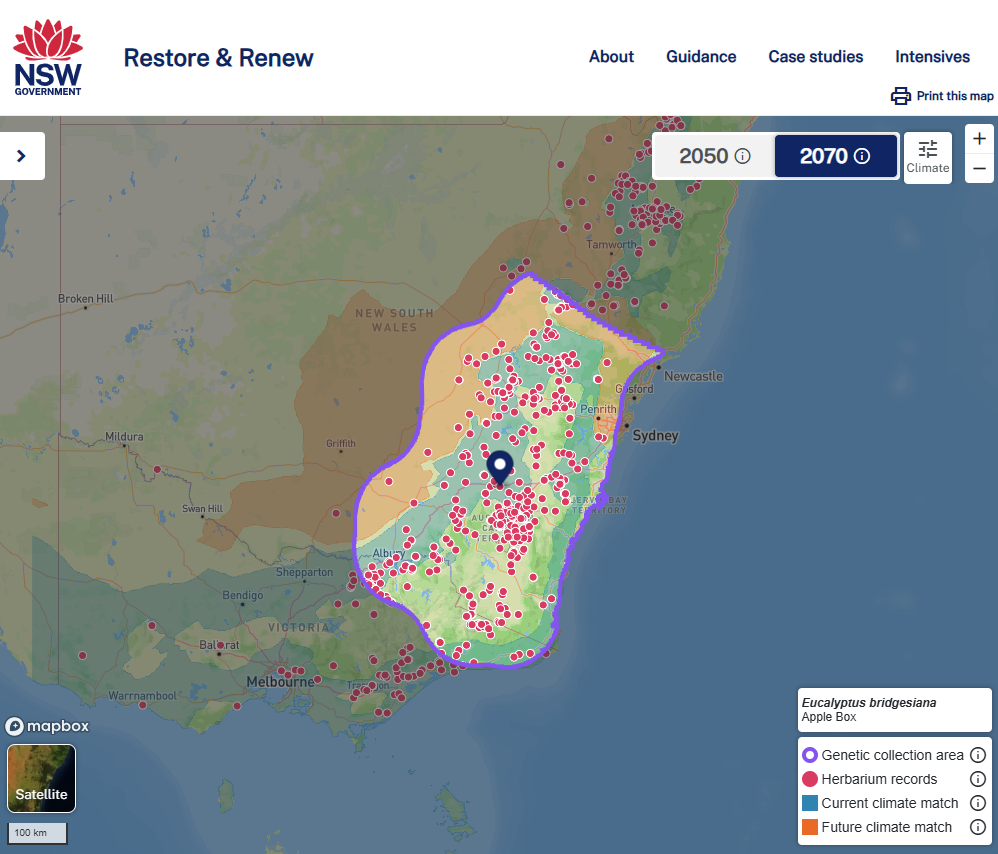
The Restore & Renew webtool identifies suitable seed collection areas for 100 native plant species
Besides considering a species’ natural distribution and the recommended genetic collection area, there are several other practical hurdles. Since we purchase the vast majority of our seed through retailers, we rely on information they can provide. We regularly ask questions such as:
- Where was the seed collected? (We aim for around six different provenances per species).
- Is the seed from remnant populations, Seed Production Areas (SPAs), or revegetation sites? (We can’t be sure of the original genetic provenance from reveg areas, and information about the original provenances that go into SPAs is variable).
- Was the seed collected from a healthy stand of vegetation with numerous individuals? (Small, isolated populations have a greater chance of being in-bred).
- What year was the seed collected? (Depending on the species, fresh seed generally has a better germination rate).
- What is the price? (We have a limited budget).
- What quanity is available? (Sometimes there is not enough for our requirements).
In practice, decisions about which seed collections to purchase are a balancing act of these variables, requiring close scrutiny of numerous maps and spreadsheets!
Once the seed arrives in the mail, a volunteer conducts germination testing on each new collection, and only those that have viable seed are included in our spring sowing. This coming spring, some of the seed will go to direct seeding, as well as tubestock production. Watch out for more information on that in future blogs.
By Sonya Duus, Climate Ready Revegetation Project Officer
The Climate Ready Revegetation Project has been assisted by the NSW Government through its Environmental Trust. Landcare Australia Michael King grants enable us to purchase seed from diverse provenances.