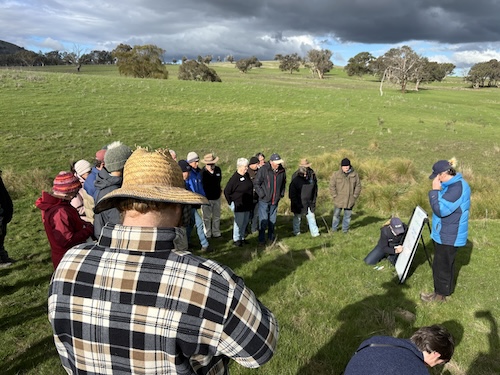
Around 30 local landholders gathered at Bookham recently for a Landscape Rehydration Field Day hosted by Bowning Bookham Landcare and presented by the Mulloon Institute.
The day offered a practical introduction to one of the most important resources on any farm – water. Participants explored why keeping water in the landscape benefits not only individual farming enterprises, but also the wider district and the environment as a whole.
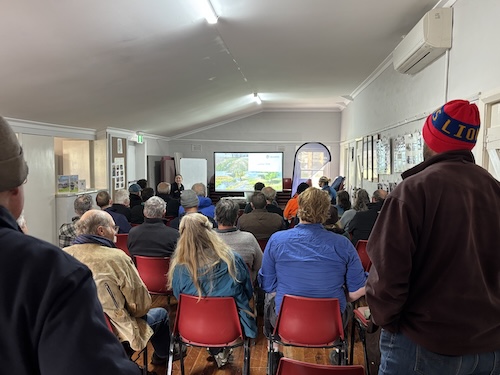
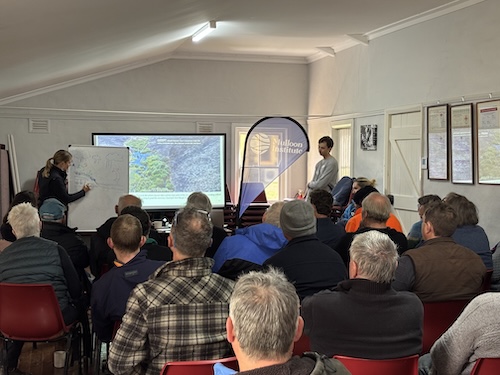
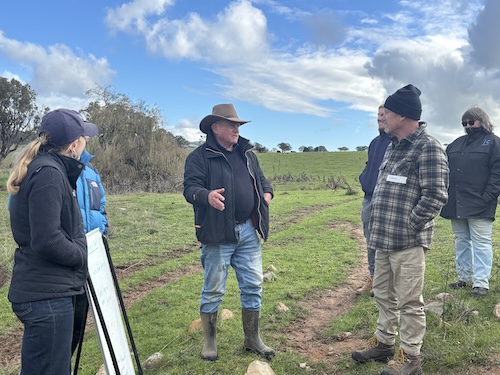
The morning began with Program Manager Erin Healy and Landscape Planner Annabel Manning unpacking some of the science behind landscape rehydration. From simplified thermodynamics to the water cycle, they explained how water moves through our landscapes and why healthy, well-vegetated systems are so important.
One of the key concepts discussed was the difference between the “big” water cycle and the “small” water cycle. While we often think of water evaporating from the oceans and returning as rain, the small water cycle involves plants returning moisture to the atmosphere through evapotranspiration and transpiration. Remarkably, all of the water in this smaller cycle falls back onto land as rain.
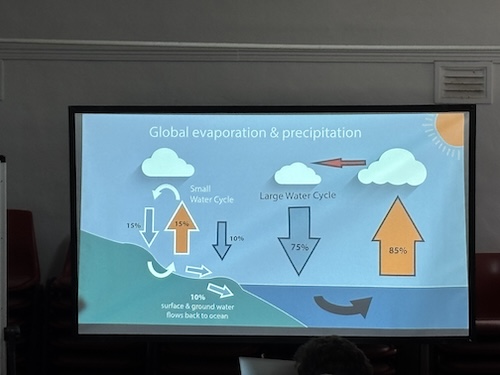
Healthy landscapes with abundant vegetation can cycle water through this process many more times before it is lost to the oceans. More plants create more organic matter, organic matter holds more water, and more water supports more plant growth – a positive cycle that benefits both productivity and resilience.
Following morning tea, the theory came to life with a miniature landscape demonstration. Using a hose flowing down a driveway, participants watched how water moves across different surfaces and slopes. The exercise highlighted how factors such as surface roughness, slope and opportunities for water to spread can influence erosion, deposition and water movement.
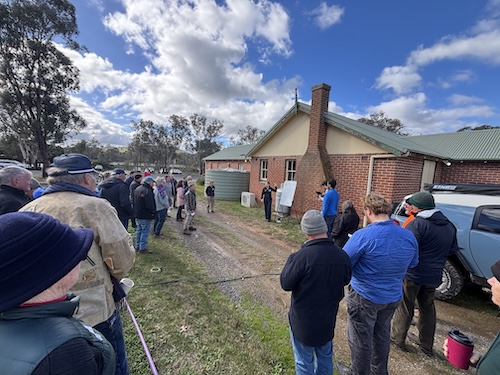
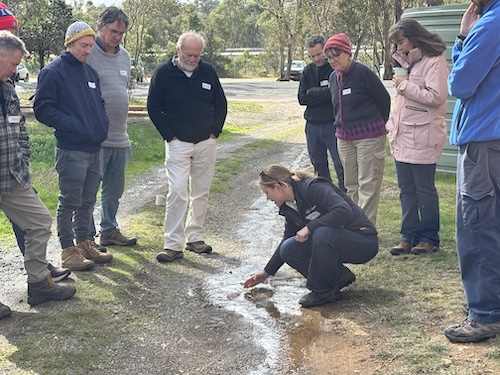
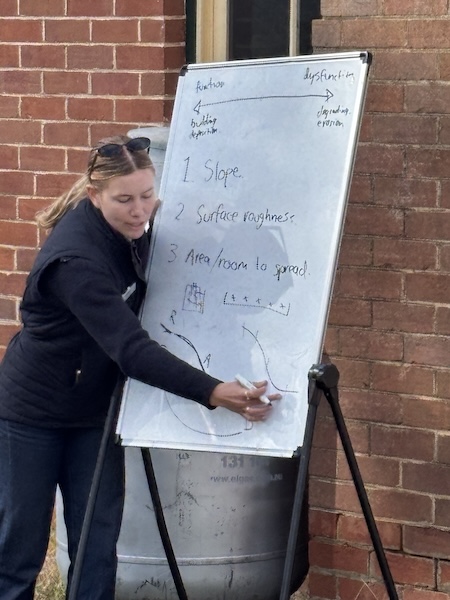
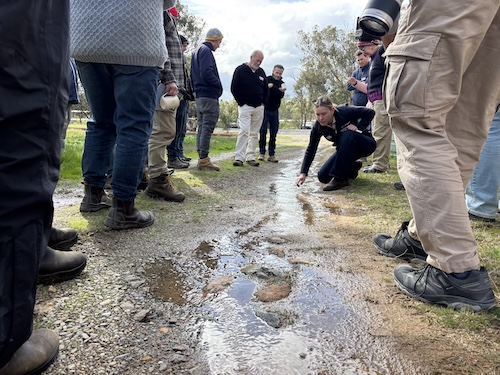
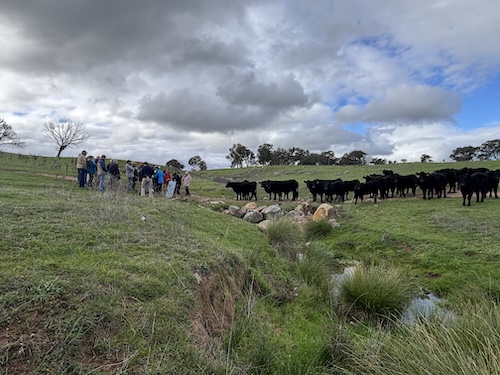
After lunch, the group headed to a nearby property to see these principles in action. Participants inspected areas where water flow condensed and spread, observed head cuts and erosion features, and discussed how different interventions can help slow water, reduce erosion and improve landscape function.
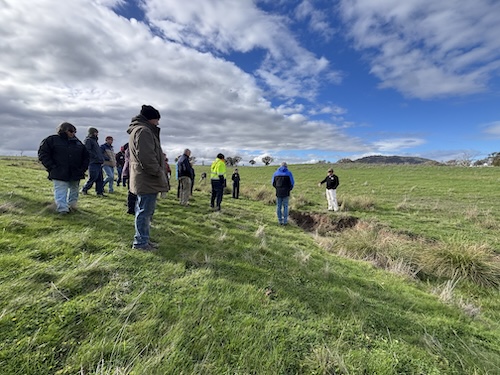
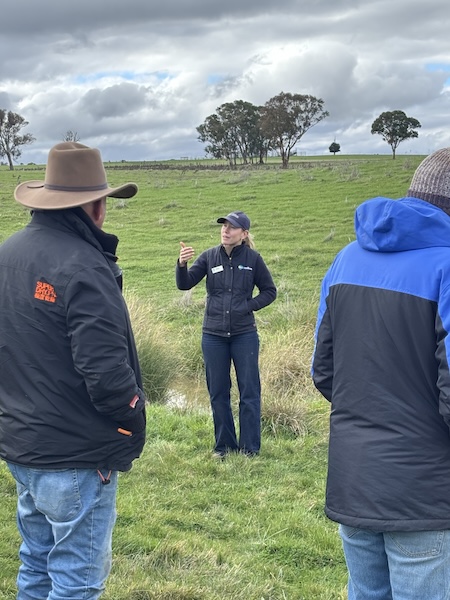
A memorable analogy from the day compared a metre-deep flow of water moving down a creek to the force of an Angus bull. By pure coincidence, a nearby mob of Angus heifers appeared at just the right moment, providing a perfect visual demonstration and a few laughs among the group.
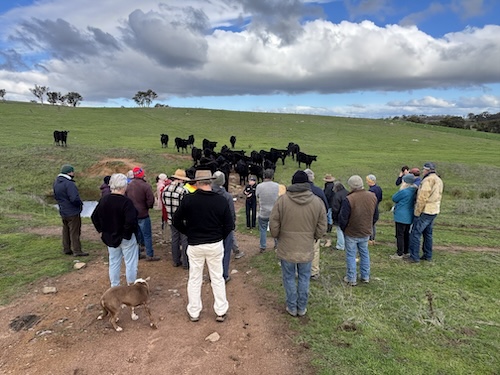
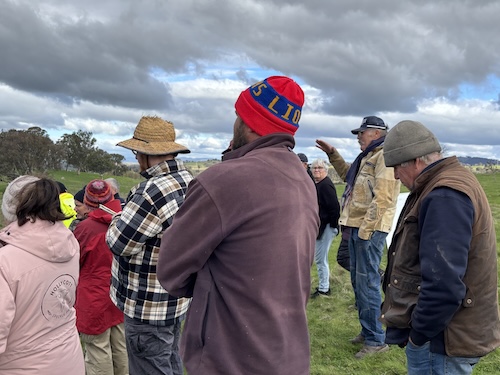
Throughout the day, discussion focused on practical steps landholders can take to improve water retention and landscape health. Key priorities included:
- - Planting more vegetation
- - Protecting and expanding intact landscape features
- - Slowing actively eroding areas
- - Repairing or rebuilding degraded waterways
Participants also learned about different stages of intervention, including encouraging water to flow through, over and around structures in ways that support landscape function.
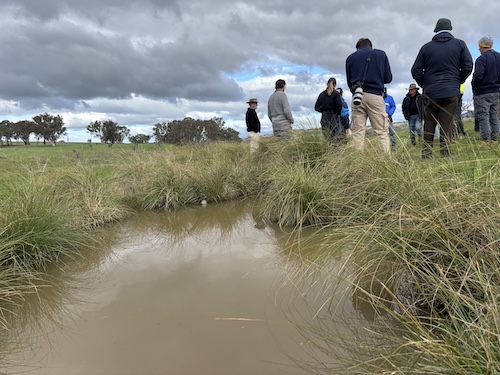
The field day covered a remarkable amount of useful and practical information, providing plenty of ideas for landholders interested in building more resilient and productive landscapes.
For those keen to learn more, the Mulloon Institute will return to the district in August to deliver a two-day Landscape Rehydration Bootcamp. The bootcamp will build on these concepts, helping landholders develop practical plans tailored to their own properties.
If you are interested in attending, keep in touch with Bowning Bookham Landcare for upcoming details.
________________________
This Community of Practice (CoP) project is funded through HumeLink’s Community Investment and Benefits Program. The project is designed to ensure local communities share in the positive outcomes of the project through targeted funding and support.